The Amazon Business B2B marketplace has become one of the most powerful platforms for companies buying and selling products at scale. It has over 8 million business customers globally and more than $35 billion in annual gross sales.
For sellers, the platform opens access to verified business buyers, higher order values, and long-term purchasing relationships.
This guide explains what the Amazon Business B2B marketplace is, how it works for buyers and sellers, associated costs, and whether joining the Amazon B2B program makes sense in 2026.
Before we dive deep, you need to understand the basics, like Amazon Vendor Central vs Seller Central. Hint: A Vendor Central account is invited by Amazon only, and Seller Central is open to all sellers.
Quick Answer: A Complete Guide to Amazon Business B2B Marketplace
- Amazon Business is a dedicated B2B platform on Amazon that connects sellers to millions of verified business buyers with features like bulk pricing, quantity discounts, and tax-exempt options.
- It’s totally free for buyers to join and shop, while sellers need a Professional Amazon account ($39.99/month) plus standard fees.
- Sellers gain access to higher-value orders, repeat business, and tools for business-only pricing.
- Buyers enjoy easier procurement with multi-user accounts, approval workflows, spending analytics, and cost-saving bulk deals.
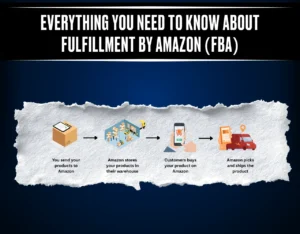
Pro tip: For any seller, learning about the difference between Amazon FBA vs dropshipping is important. In FBA, you use an Amazon warehouse to store and sell items. But in dropshipping, you directly source products to your customers.
Part 1. What Is the Amazon Business B2B Marketplace?
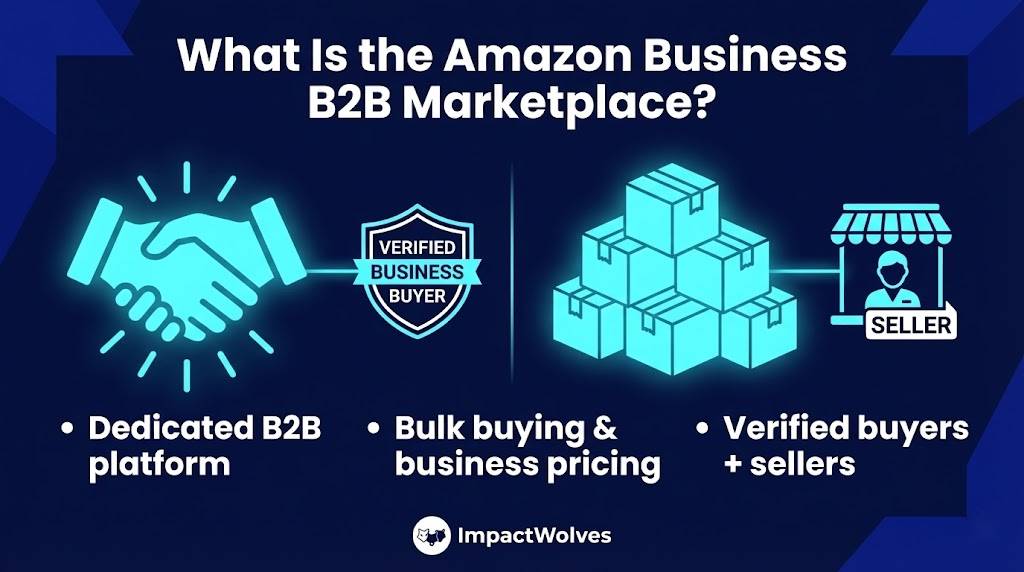
The Amazon Business B2B marketplace is Amazon’s dedicated platform for business-to-business commerce. It is designed to support commercial purchasing by offering features that address bulk buying and business-specific pricing.
For Sellers
Amazon Business gives sellers a way to connect with tons of verified business buyers, and it’s great for selling in bulk.
Special prices just for businesses, deals on bigger orders, and tweaking the listings to fit what B2B customers need are some of the benefits. The platform supports both small brands and large manufacturers looking to scale wholesale-style sales while leveraging Amazon’s infrastructure.
For Buyers
Amazon Business makes procurement easier and helps companies cut costs. You get special pricing just for businesses, options to buy in bulk, and accounts that several people can use together with approval workflows. Buyers can manage spending, access invoices, and benefit from tax-exempt purchasing where applicable.
Looking for a specific seller? Learn how to search for a seller on Amazon
What are the Benefits of the Amazon Business B2B Marketplace?
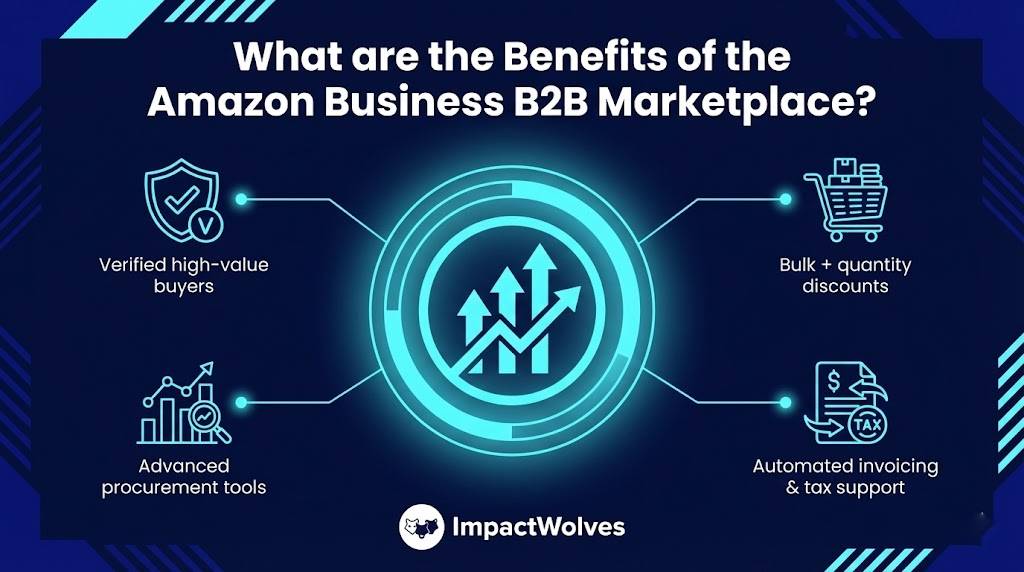
The Amazon Business B2B marketplace delivers clear advantages for companies:
- Access to verified business customers with higher average order values
- Business pricing and quantity discounts that support bulk purchasing
- Advanced procurement tools for approvals, spending control, and reporting
- Automated invoicing and tax support for compliance and accounting
- Scalable selling infrastructure without building a separate B2B platform
Part 2. Which Types of Businesses Benefit from Selling on Amazon Business?
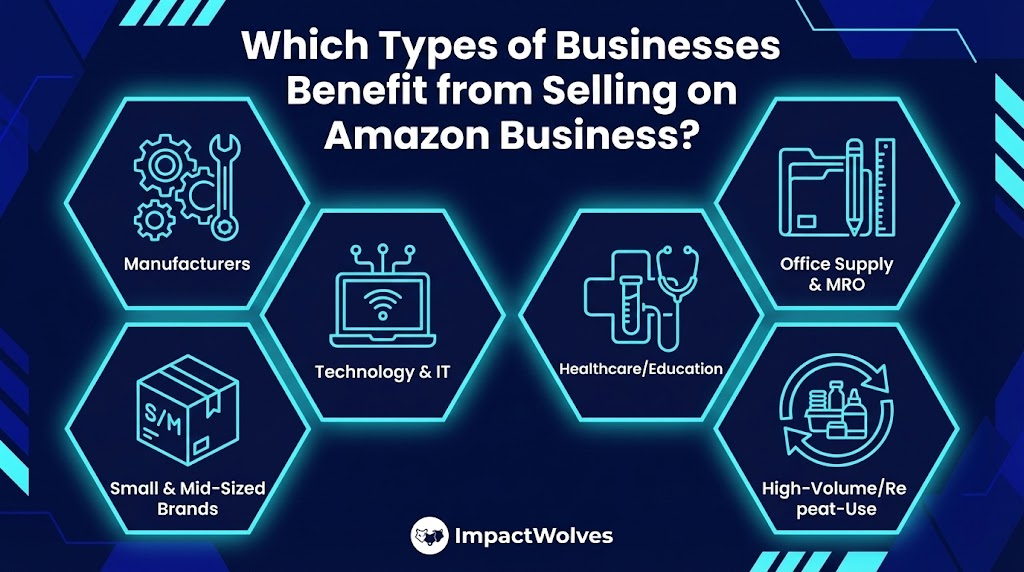
The Amazon Business B2B marketplace works best for companies selling products that businesses use every day or tend to buy in bulk.
1. Manufacturers and Distributors
Companies offering industrial parts, safety gear, tools, or anything built for commercial use fit right in this platform.
2. Office Supply and MRO Sellers
Sellers of office supplies and MRO (Maintenance, Repair, and Operations) products perform well on Amazon Business.
3. Technology and IT Equipment Providers
Companies that offer laptops, networking gear, computer accessories, or IT equipment benefit a lot.
4. Healthcare, Education, and Institutional Suppliers
Suppliers of medical products, lab equipment, educational materials, and institutional supplies can grow fast.
5. Small and Mid-Sized Brands
They can expand into B2B without building a separate wholesale channel. Amazon Business provides infrastructure, logistics, and buyer trust from day one.
6. Sellers of High-Volume or Repeat-Use Products
Products such as PPE, cleaning supplies, consumables, and packaging materials are well-suited for the platform.
| Pro tip for sellers: Interested in establishing your brand on Amazon? You can easily make an irrefutable image on the store using the Amazon brand story feature. |
Part 3. How to Open an Amazon Business B2B Account for a Buyer?
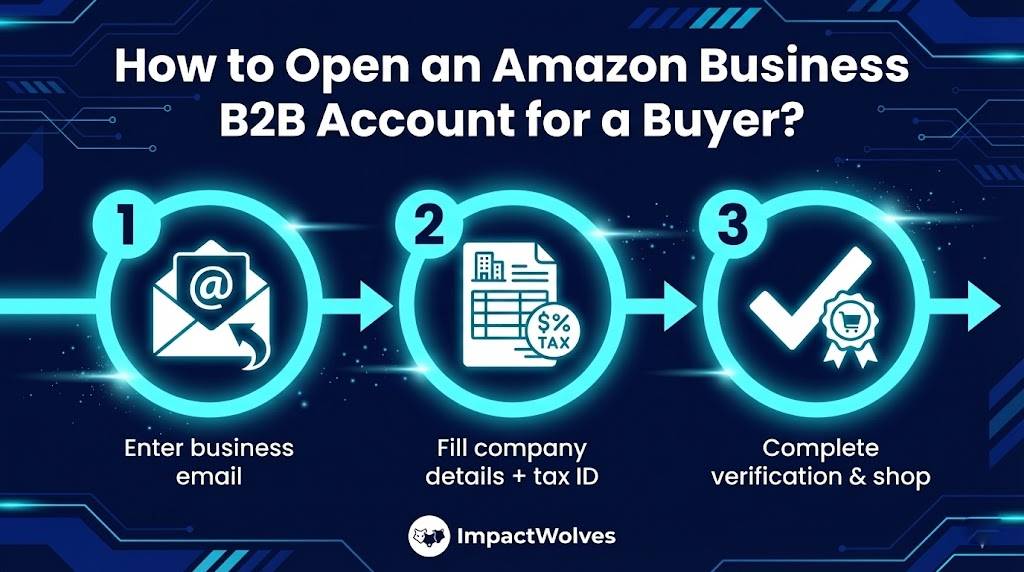
An Amazon Business buyer account is free to set up, and there are no subscription fees or minimum spend requirements. To register, you need a few basic business details for verification.
Requirements to Open an Amazon Business B2B Account for a Buyer
- A work or business email address
- Basic company information: legal business name, registered address, and contact number.
- A tax ID or Business PAN
Steps to Open an Amazon Business B2B Account for a Buyer
Step 1. Visit the Amazon Business registration page and enter your work/business email address to Get Started.
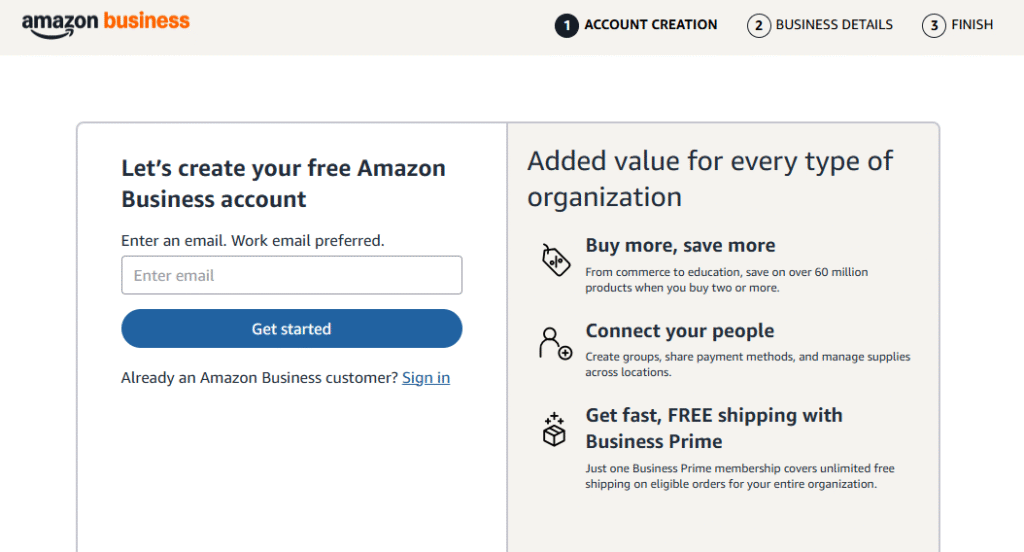
Step 2. After that, just fill in your business info, from the company name and address to tax ID or PAN.
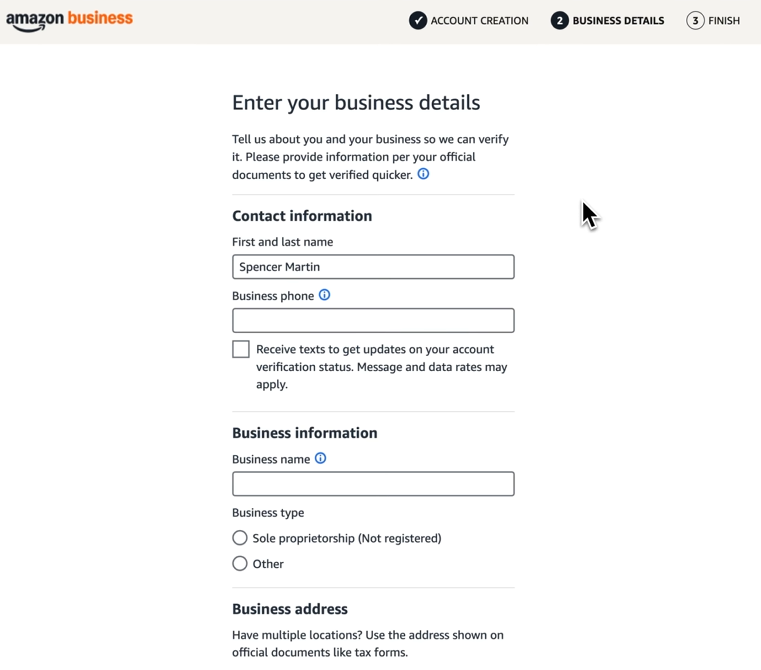
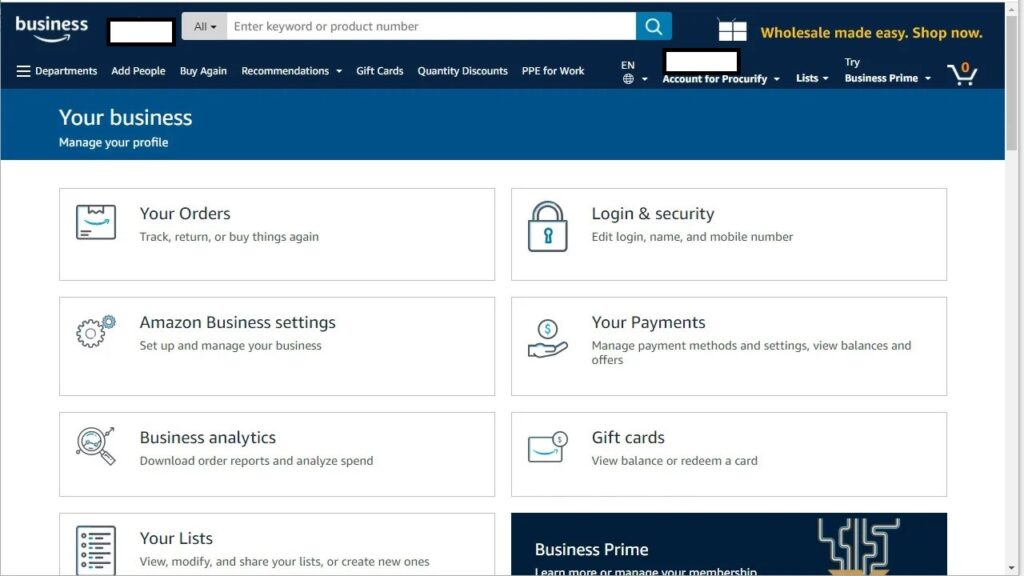
Step 3. Lastly, complete all the verifications required by Amazon and access your account to start purchasing.
Part 4. How to Open an Amazon Business B2B Account for a Seller?
You need to have an active Amazon seller account to start selling on the Amazon Business B2B marketplace. Other requirements and steps include:
Requirements to Open an Amazon Business B2B Account for a Buyer
- A Professional Amazon seller account
- Valid business details, such as your legal business name and registered address
- A government-issued ID for the primary contact person
- Bank account information to receive payouts
- Tax information such as GSTIN, VAT, etc.
Steps to Open an Amazon Business B2B Account for a Seller
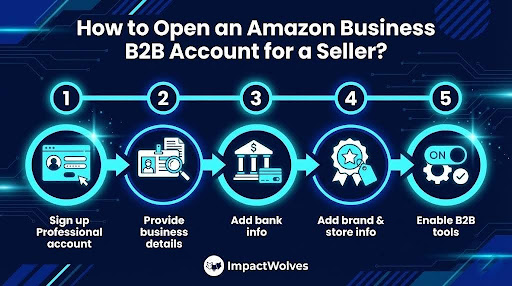
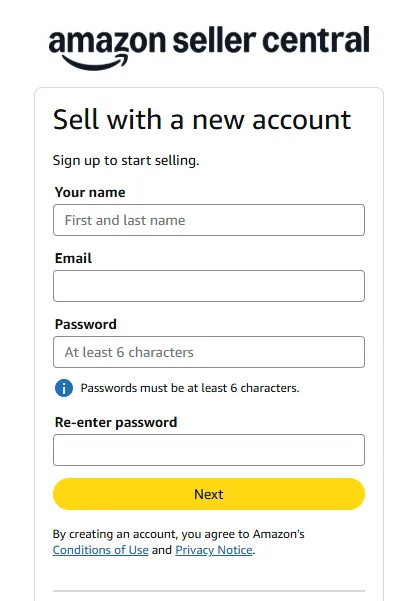
Step 1. Go to the Amazon seller registration page and sign up for a Professional selling account. If you have an old one, you can simply change the ownership to your business.
Step 2. Here, provide all the core details, from business email and legal business name to contact details, to complete the identity verification process.
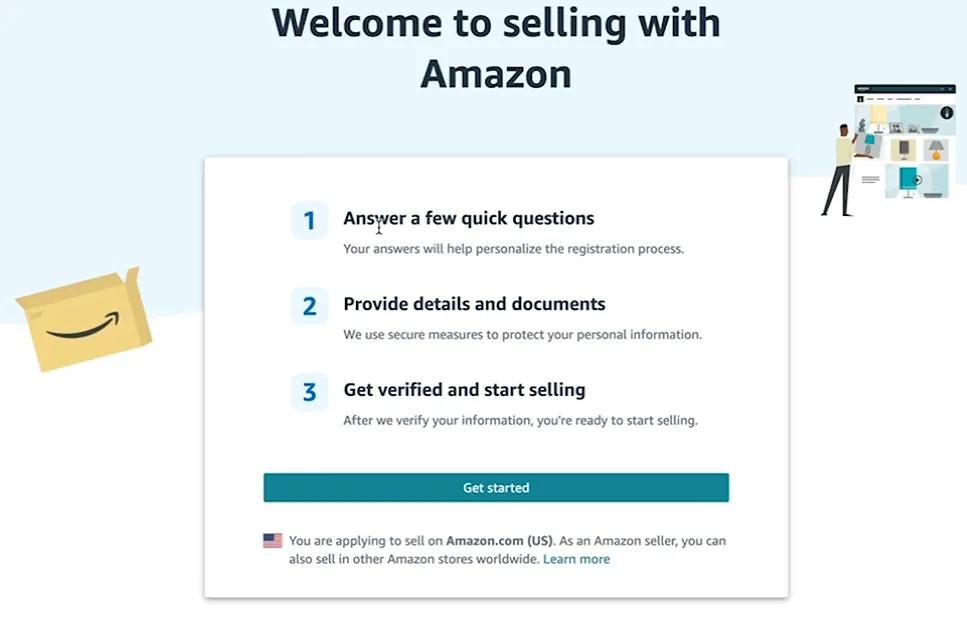
Step 3. Then, enter your bank account information so Amazon can process your payouts.

Step 4. Next, add store information like brand registration, trademark, etc.

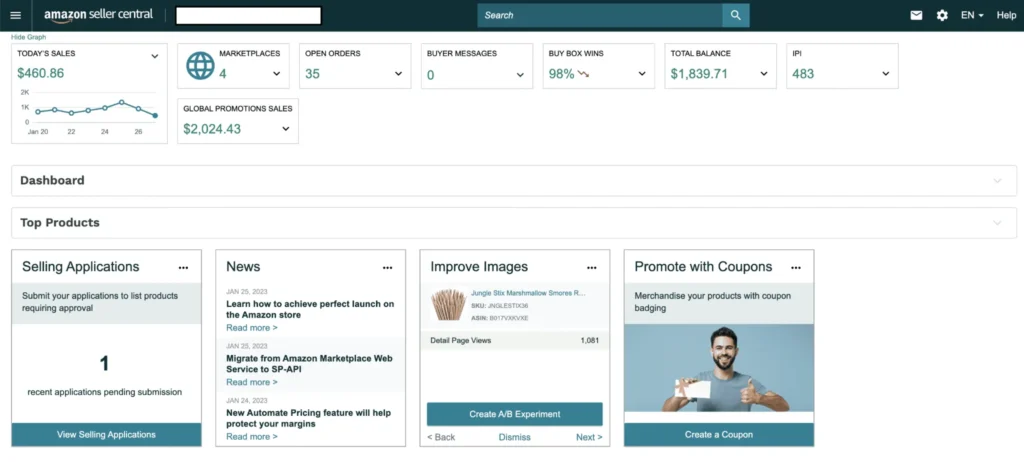
Step 5. Lastly, after account activation, navigate to the B2B or Amazon Business section to enable B2B tools.
Part 5. What’s the Cost of Amazon B2B?
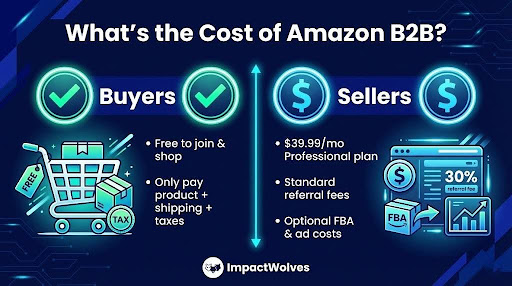
Amazon Business is free for buyers, while sellers pay standard Amazon selling fees tied to a Professional account. Moreover, different types of optional fulfilment services can also increase costs for sellers.
Cost of Amazon B2B for Buyers
Business buyers join and purchase on Amazon Business without paying any subscription or minimum order fees. They only cover the product price, shipping costs, and applicable taxes.
Cost of Amazon B2B for Sellers
Sellers on Amazon must use a Professional Seller plan to start selling B2B, which is priced at $39.99 per month. Also, sellers pay referral fees per sale and additional charges if they use Fulfilment by Amazon, long-term storage, returns processing, or Amazon advertising tools.
Still wondering if selling on Amazon is worth it? Read our full analysis here.
Part 6. Tips for Buyers for Amazon Business B2B Marketplace
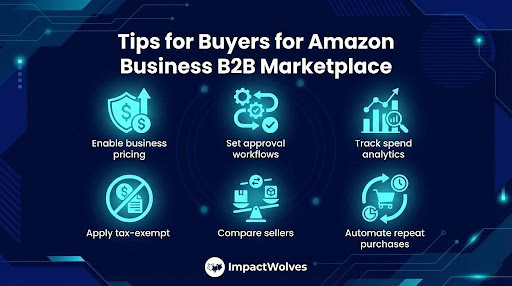
To get the most value from the Amazon Business B2B marketplace, buyers should use the following tips:
1. Enable Business Pricing and Quantity Discounts
Activate business pricing to access lower per-unit costs on bulk purchases and reduce overall procurement expenses.
2. Use Approval Workflows to Control Spending
Set up multi-user accounts with approval rules to manage purchases across teams and prevent unauthorized spending.
3. Track Spend Using Business Analytics
Review spend reports regularly to monitor purchasing patterns, optimize budgets, and identify cost-saving opportunities.
4. Apply for Tax-Exempt Purchasing
If eligible, enable tax-exempt status to receive compliant invoices and avoid paying unnecessary taxes.
5. Compare Sellers for Better B2B Deals
Check multiple sellers offering the same product, as business pricing, discounts, and delivery terms can vary.
If you are new to all this, read how to find an Amazon Storefront to properly take your first step.
6. Automate Repeat Purchases
Save frequently ordered items and set up recurring orders for consumables to ensure a consistent supply and reduce manual ordering effort.
Part 7. Tips for Sellers for Amazon Business B2B Marketplace
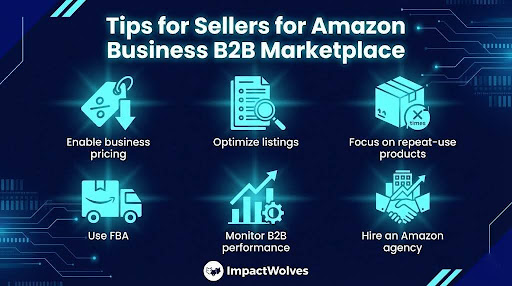
Successful sales on the Amazon Business B2B marketplace require a different approach than standard B2C selling. The following tips focus on increasing visibility to win bulk orders and improve profitability:
1. Enable Business Pricing and Quantity Discounts
Set sharp business prices and offer clear tiered discounts to pull in bulk buyers. B2B customers care about saving money, and they’re more likely to place big orders when they know exactly what deals they’re getting.
2. Optimize Listings for Business Buyers
Use clear titles, specifications, and product details that address professional use cases. Business buyers also pay close attention to details, as accuracy, certifications, and compatibility matter way more to them than flashy marketing.
3. Focus on High-Volume and Repeat-Use Products
Prioritize products that businesses purchase regularly, such as consumables or operational supplies. These items generate recurring orders and higher lifetime value.
4. Use FBA to Win Large and Repeat Orders
Fulfillment by Amazon improves delivery speed and reliability. Many business buyers prefer FBA listings for consistent fulfillment and easier returns management. You can find out here if using FBA is worth it for you.
5. Monitor B2B Performance Separately
Keep an eye on B2B numbers like bulk order volume, how your business pricing stacks up, and how often companies come back for more. These details help you optimize your prices and manage inventory a lot smarter.
6. Hire an Amazon Agency for Faster Growth
Handling Amazon Business pricing, bulk deals, and campaigns gets complicated fast. A good Amazon agency knows the inner workings, helps you dodge expensive slip-ups, and pushes your growth forward a lot quicker.
Why Hire Impact Wolves to Fast-Track Your Amazon Growth?
If you’re looking for an agency, Impact Wolves is a strong choice. They handle daily campaign management, freeing up your valuable time.
You avoid trial-and-error losses through customized strategies tailored to your specific goals. Comprehensive audits identify wasted spend and missed growth opportunities. Moreover, you can go through their case studies, like how we increased Biovantic Pharma’s sales by 97%.
Impact Wolves is currently offering a time-limited package that includes a 30-minute strategy meeting plus a free Amazon store audit.
Part 8. Should You Open an Amazon B2B Store?
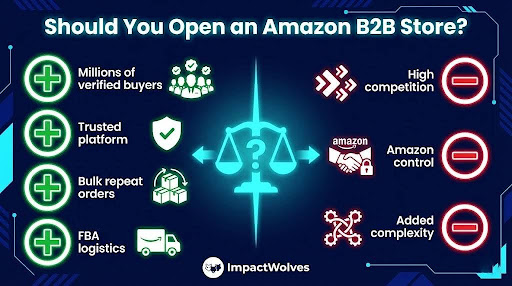
Opening an Amazon Business B2B store makes sense when your products target bulk buyers. Your operations should be able to handle wholesale pricing, invoicing, and larger order volumes.
In fact, Joel Mendlowits, Head of Marketplace at Adorama, praised Amazon B2B by saying:
“Amazon Business provided us with a unique opportunity to tap into a vast network of business customers.”
Let’s look at the pros and cons of the Amazon business so you can make a thorough decision:
Pros
- Exposure to millions of verified business customers actively searching for bulk and repeat purchases.
- Amazon’s trusted platform reduces friction for business buyers and can increase conversion rates.
- Features like business pricing, multi-user accounts, and tax-compliant invoicing help attract commercial buyers.
- Using FBA can streamline logistics, enabling faster delivery and handling returns.
- Businesses usually repurchase supplies regularly, helping build predictable order volume.
Cons
- High competition among sellers can lead to downward pricing and thinner margins.
- Amazon controls much of the listing and customer interaction, making it harder to build deep direct relationships.
- Managing inventory, bulk pricing, and compliance features adds complexity.
Conclusion
In summary, the Amazon Business B2B marketplace offers buyers bulk pricing and procurement tools. At the same time, sellers get access to high-value, repeat business. Success requires careful pricing, listing optimization, and performance management.
For sellers seeking faster growth and expert support, contacting Impact Wolves provides campaign management. They offer customized strategies and a free audit with a 30-minute strategy call.
FAQs
1. Does Amazon Business charge additional fees to sellers?
No, there are no separate Amazon Business fees. Sellers pay the standard Professional selling plan subscription, referral fees, and optional fulfillment or service fees.
2. Can the same product be sold to consumers and business buyers?
Yes, you can list products for both B2C and B2B buyers at the same time. For business customers, you just set special pricing and bulk discounts. That doesn’t mess with what regular shoppers see. It is even possible for you to sell products without having them in actual inventory.
3. Is Amazon Business worth it for small and mid-sized brands?
Absolutely. It provides access to verified business buyers, bulk order opportunities, and procurement tools. This helps smaller brands scale without building a separate B2B channel.
4. What Products Need Approval for Amazon B2B?
Product categories, such as medical devices, automotive parts, jewelry, and regulated goods, require prior approval. Sellers must submit invoices, compliance documents, or certifications before listing these items.